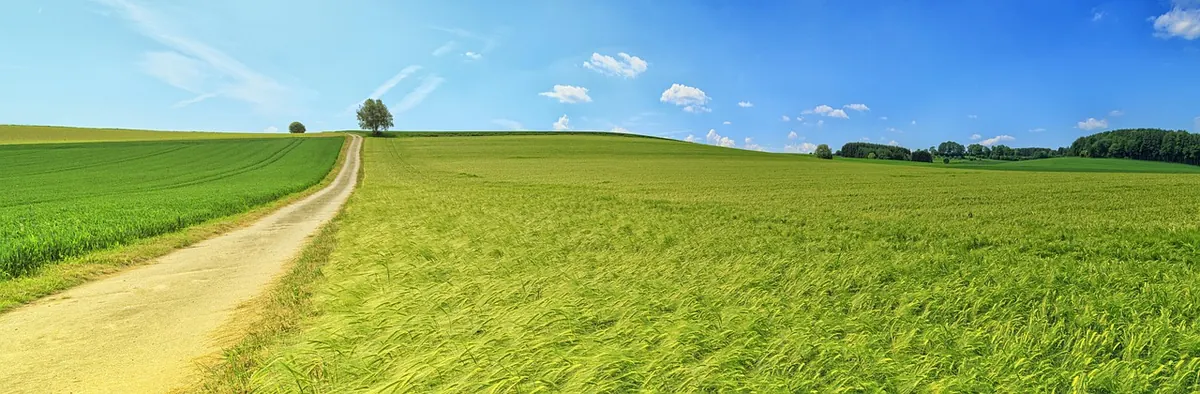
By the last week of August, the countryside has stopped performing. The sunflower fields that were a postcard in July now stand with their heads bowed, petals faded to the colour of weak tea. Wheat stubble has gone the pale gold of old paper. The air smells of dust and dry grass, with something sweet underneath that you cannot quite place — fig, perhaps, or the last blackberries in the ditch.
This is some of the best walking of the year, and hardly anyone does it. The worst heat has usually broken, the light comes in lower and longer, and the land is busy with small endings. What follows is a way to walk it slowly: what to look for, what to carry, and how to bring something home in a camera rather than a bag.
Choose Your Hours
Late summer in Italy is not one climate. A lane in the Veneto in late August feels nothing like a track in the Sicilian interior, and the difference matters more than any general advice about timing. Walk where you are, at the hours that suit that place.
As a rule, though, two windows are worth planning around. The first is early, from about half an hour after sunrise until nine. The air is still, the light is soft and slightly blue, and the fields are loud with crickets before the day dries them out. The second is the two hours before sunset, when the sun drops low enough to come in sideways, throwing long shadows across stubble and turning every seed head into a small lamp.
Between eleven and four, stay off open ground. If you want to walk at midday, choose a wooded track, an old mulattiera shaded by oaks, or a lane with a wall on one side. Take more water than you think you need, and turn back before you are tired rather than after.
Read the Fields
A late-summer field is a record of what happened in the last three months. Learn to read a few and the walk becomes a story rather than a backdrop.
Sunflowers are the obvious marker. In the morning, heads still track the sun; by the end of the season they hang heavy and black, and the fields are often left to dry before harvest. Maize stands tall and rustling, its cobs wrapped and its tassels browning. Hay has been cut and baled, and the round bales left in the stubble take on the colour of the light. Ploughed earth, darker than anything around it, holds the shape of the furrows and the smell of rain long after rain.
Then look at what was not planted. The margin, the strip the tractor missed, the corner too awkward to plough. That is where the season is most alive: wild fennel gone to seed, chicory in its blue phase, amaranth, the first ripe blackberries, elderberries turning from red to near-black. A vine row will show you the year in miniature — grapes swelling and colouring, leaves already tired at the edges.
Walk the Edges
The centre of a field is a crop. The edge of a field is a habitat, and it is where a slow walk repays you most. Give yourself permission to cover less ground and spend it on the verges.
Hedgerows and ditches hold the insects, and the insects hold the birds. In late August you may see praying mantises on dry stems, dragonflies working a shaded ditch, clouded yellows and swallowtails on the last of the wild flowers. Kestrels hover over stubble, hunting the small mammals that have moved in since the harvest. In the south, bee-eaters are already gathering to leave, and starlings begin to move in the evenings. Jays are busy with acorns; hoopoes are easy to hear and hard to see.
Dry stone walls, old fences, the ruins of a farm building, a shrine at a crossroads — these are the places to slow down. Sit. Wait ten minutes without moving and the edge of the field will resume what it was doing.
What to Carry
You do not need much, but the right small things make the difference between a pleasant hour and a long, uncomfortable afternoon.
- Water, in a bottle you can refill. More than feels necessary, especially if you are walking alone.
- A wide-brimmed hat and a light long-sleeved shirt. Better than sunscreen you have to keep reapplying.
- Closed shoes with grippy soles. Stubble is sharp, ditches are uneven, and gravel lanes are slippery in the dust.
- A cotton scarf or bandana. For sun on the neck, dust, and the odd thorny gap.
- Your phone, charged, and a note of where you are going left with someone at home.
- A small notebook and pencil. Faster than a phone for jotting what you saw and where.
- A cloth bag for your own rubbish, and for anything you find and carry out.
- A head torch if you plan to be out at dusk and the lane home has no lights.
A note on foraging: collecting wild plants and mushrooms is regulated region by region in Italy, and on private land you need the owner's permission. Admiring is always allowed. Picking is not, by default.
Photographing the Season
Late summer is generous to a camera, mostly because the light does the work and the subjects hold still.
Work with the low sun
Shoot into the light in the early morning or the evening and the world turns to texture: grasses glowing at the edges, dust hanging in a beam, the fuzz on a dried thistle lit up like wire wool. Shade the front of your lens with your hand to keep the contrast under control, and expose for the bright part of the frame rather than the shadows.
Get down, and get close
The best pictures from a late-summer walk are usually not of the landscape. They are of what is at knee height: a split seed pod, a snail aestivating on a wall, the pattern of tractor tracks in dry earth, a single poppy left in the stubble. Kneel. Put the phone or camera level with the subject rather than pointing down at it.
Use scale, and be sparing
A human figure far down a lane gives the landscape its size; a bicycle against a wall does the same in a village. Beyond that, take fewer photographs than you want to. Twenty considered frames will tell the story of a walk better than two hundred, and you will remember the walk itself rather than the screen.
Slow the Pace
Aim for a kilometre an hour and you will not be far wrong. Three or four kilometres out and back along a lane between two fields is a full afternoon at that speed, and it is enough.
If you need a structure, try this: choose a square metre of field margin and count the species in it. Or walk for twenty minutes and then sit for ten, doing nothing but listening — tractor, cicada, a dog three fields away, the wind in the maize. It sounds like a small thing. It changes the walk completely.
Before You Set Off
Pick a route that is simple and known: a lane between two fields, out and back, with a wall to sit on halfway. Go early or go late. Carry water and a hat, and leave the route with someone at home if you are walking alone.
Stay on tracks and footpaths; do not cut through crops, and always close a gate you opened. Check yourself for ticks in the evening, especially around the ankles, hairline and waist. If a tick stays attached and you are unsure how to remove it, or if you develop a rash or fever in the days afterwards, ask a pharmacist or doctor rather than guessing. In high summer, treat the heat seriously: a shorter walk finished comfortably beats a long one finished badly.
And when you get home, write down two things you noticed that you did not expect. That is the whole practice, and it is what next year's walk will be built on.
Photo: jplenio / Pixabay